A Beginner’s Shortcut to Professional Results: Why I’m Glad I Took This CourseReview: Dynamic Myofascial Release Course at RSM International Academy
I’ll be honest: I was nervous signing up for the Dynamic Dynamic Myofascial Release Course. Even though I had taken the foundational Trigger Point course at RSM, reading the syllabus for this one made me worry it would be over my head. I’m still new to this industry, and the idea of "neurofascial mechanics" sounded like something only physiotherapists could do.
I thought I would just be watching from the sidelines. Instead, this course gave me a level of confidence I didn't think was possible for a beginner. It turned vague concepts into hands-on skills I could actually use.
Making Anatomy Click
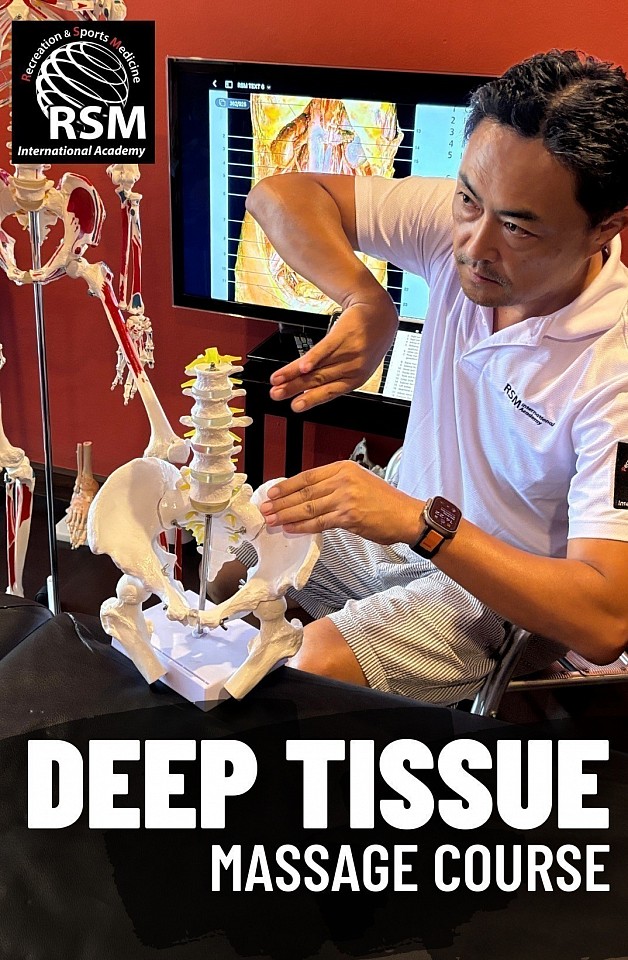
My biggest struggle as a newbie has been visualizing what’s under the skin. RSM solved this completely. We spent five days exploring fascia anatomy and function using high-resolution images and videos of real human movement.
Seeing how the deep fascia layers actually slide over each other—and what happens when they get stuck—was a lightbulb moment. It wasn't boring academic theory; it was visual proof. Suddenly, I wasn't just guessing where to press. I could visualize the structures, which made learning how to identify fascial restrictions so much easier than I expected.
It’s Not Just "Massage"
Before this week, I didn't really understand the difference between massage and myofascial release. I thought it was just a fancy name for slow massage. I was wrong.
I learned that while massage often focuses on relaxing muscles, myofascial release is about restoring the glide between tissues and nerves. Hironori Ikeda, the lead instructor, taught us a "Dynamic" method that combines pressure with movement. It feels completely different to give and receive. For a beginner, this is a huge advantage because it produces results much faster than standard relaxation techniques.
Real Solutions for Common Pain
I used to panic when friends or clients asked me about specific pain. I would worry, "What if I hurt them?" This course gave me a roadmap. We learned specific protocols for myofascial release for back pain, focusing on the thoracolumbar junction and hip rotation.
We also covered myofascial release for chronic pain conditions like sciatica and neck tension. Learning about "nerve glides" sounded intimidating at first, but the way it was taught was incredibly logical. I learned that by gently freeing the nerve pathway, you can relieve pain without forcing anything. It took the fear out of treating people.
Why Stretching Wasn’t Working
I’ve always told people to "just stretch more," but I realized here why that often doesn't work. We spent a lot of time comparing myofascial release vs traditional stretching.
I learned that if the deep fascia is glued together, pulling on it with a static stretch won't help—it might even irritate the nerve. By using the techniques I learned in this fascia and stretching training, I saw immediate changes. The effects of myofascial release on flexibility were instant. We watched classmates gain 10 or 20 degrees of range of motion in seconds just by releasing a specific line. It felt like magic, but it was just pure anatomy.
Learning from the Best
The instructor, Ikeda Sensei, has over 25 years of experience in sports medicine, yet he never made me feel stupid for asking basic questions. His demonstrations were clear and precise. Even though there were experienced therapists in the room, the small class size meant I got just as much attention and correction as they did.
Conclusion
If you are just starting out, don't feel like you have to wait years to learn "advanced" techniques. This course fast-tracked my understanding of the body. It moved me away from just rubbing surface muscles and gave me a real, structural system to work with.
Now, instead of just offering relaxation, I can explain to clients why they are tight and actually fix the restriction. The Dynamic Myofascial Release Course is the best investment I’ve made in my new career because it taught me to think like a professional from day one.